




Healing through heritage
Physical and mental healing happens in the most unexpected places, like the sacred, peaceful walls of a once-abandoned monastery just outside the city of Manchester.

|
| Gorton Monastery in 2007 (Photo: Pete Birkinshaw, Wikimedia). |
In a world where stress, isolation and mental health challenges are becoming ever more prevalent, there is an urgent need for spaces providing a different approach to health, both physical and mental, that has emotional and spiritual healing at its heart. At Gorton Monastery in Manchester, we are pioneering a holistic approach to wellbeing that blends heritage, community engagement and integrative health practices, creating a haven for preventative health in the heart of one of the most deprived areas in the country. This approach is directly supporting our local community, complementing existing services, while at the same time demonstrating the power of heritage buildings as spaces for healing.
Gorton Monastery is a Grade II*-listed building, designed by Edward Welby Pugin, that has stood for over 150 years, offering peace and serenity to all who enter. While originally a place of religious devotion, the former church and friary was closed in 1989, deconsecrated by the church and sold to property developers for conversion into flats. After that scheme failed, the site was abandoned and subsequently vandalised and left derelict. It was on the buildings-at-risk register for many years and placed on the watch list of 100 most endangered sites in the world by the World Monuments Fund in New York.
The Monastery of St Francis and Gorton Trust, formed in 1996 to find a sustainable new use for the building, led a decade-long campaign before restoration could begin. Today the monastery is still owned and operated by that charity, and it remains a sacred centre for community support and healing. There is something deeply powerful about the atmosphere in heritage spaces like the monastery: people often describe feeling a sense of calm and reflection that is hard to find elsewhere. Our work at Gorton Monastery harnesses that serenity to support mental, physical and emotional wellbeing through a wide range of integrative health activities.
Following the pandemic, we invited like-minded charities, cultural partners and health professionals to share the monastery with us so that we could achieve even more by working together. With local health partners such as the Active Health Group, Big Life Group and Healthy Me Healthy Communities, we can provide targeted health coaching and social prescribing services, ensuring that people can access the right resources for their individual needs.
At the heart of our work is the Sanctuary of Peace and Healing, which offers free listening and counselling services five days a week. This service is led by trained volunteers and professional counsellors, many of whom have lived experiences of trauma. It provides a safe, nurturing space for community members to express their emotions, work through difficulties, and find pathways to healing. Grounded in trauma-informed care, our listening sessions have helped many people overcome feelings of isolation and build stronger connections to their inner selves and their community.
In addition to emotional support, we offer a range of physical and holistic health services. Yoga, Tai Chi and somatic sessions take place weekly within the monastery walls, helping participants to align their bodies and minds through movement and meditation. Our specialised healing sessions, including reiki, bio-resonance and sound baths, offer alternative therapies to those seeking deeper relaxation and healing.
One of our most powerful innovative partnerships is with Manchester Camerata Orchestra, whose Music in Mind programme is making a real difference in the lives of people living with dementia. We host dementia Music Cafes, where music becomes a tool for emotional expression and connection. The results have been transformative—not just for the individuals with dementia, but for their families and carers as well. Music has a profound ability to transcend cognitive decline, unlocking memories and emotions that might otherwise remain inaccessible.
We have found that many people feel disconnected from mainstream healthcare services, either because they feel let down by existing services and cannot get the appointments they need, or because they do not feel that the services address their physical, emotional and spiritual needs. By offering alternative therapies, creative workshops and community activities, the monastery is becoming a model of integrative health that is both inclusive and accessible.
For example, our Men’s Shed and Men’s Talking Group projects provide safe spaces for men to talk openly about their mental health, something that is still challenging in many communities. Similarly, our arts, crafts and creative workshops give people an opportunity to relax, de-stress and express themselves through art. These activities are all underpinned by the monastery’s commitment to social prescribing, which helps people access non-clinical support to improve their mental health and wellbeing.
In July 2024, Gorton Monastery hosted the Pathways to Wellness Integrative Health Conference, which brought together NHS practitioners, GPs, alternative health experts and community members to explore the benefits of integrative health approaches. The event featured practical and trauma-informed workshops, such as laughter yoga, Alpha Stim micro-current therapy, somatics and sound baths, all of which showcased how heritage spaces like the monastery can support public health. The conference not only provided valuable insights into the mental health crisis but also reinforced the monastery’s role as a community health hub.
We believe that the model we have developed has the potential to be replicated in heritage sites across the UK. Such spaces, with their intrinsic beauty and sense of place, are uniquely suited to supporting wellbeing. Healing does not happen only in hospitals and clinics. It can happen in the most unexpected places, like the sacred, peaceful walls of a monastery just outside the city of Manchester.
This article originally appeared in the Institute of Historic Building Conservation’s (IHBC’s) Context 183, published in March 2025. It was written by Elaine Griffiths, co-founder of the Monastery of St Francis and Gorton Trust and CEO of the Monastery Manchester.
--Institute of Historic Building Conservation
Related articles on Designing Buildings Conservation.
- Conservation area.
- Conservation.
- Heritage.
- Historic environment.
- IHBC articles.
- IHBC Stress Awareness Month; Heritage Staff wellbeing at work survey.
- Institute of Historic Building Conservation.
- Listed buildings.
- Mental health.
- The economics of heritage and wellbeing.
- Wellbeing and heritage: making a difference.
- Wellbeing.
- Workplace wellbeing in the heritage sector.
IHBC NewsBlog
IHBC sponsors Gardens Trust event 23-4 Sept 2026
.jpeg)
'Learning from the Past, Shaping the Future’ takes place in Milton Keynes
Renovations to Frank Lloyd Wright's Fallingwater complete
.jpg)
World Heritage Preserved project opens house for tours again
Shakespeare Birthplace Trust places Hall's Croft on HAR Register
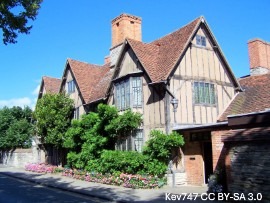
Stratford-upon-Avon home of Shakespeare's daughter is 'At Risk'
Lady Grange’s House repaired on St Kilda
.jpg)
National Trust for Scotland repairs stone cleit with link to famous island resident
Griff Rhys Jones on BBC Radio 4 Today programme
,_Green_Lane,_Derby.jpg)
The Victorian Society’s President unveiled its latest Top Ten Endangered Buildings 2026.
Need a MATE? Book your place now.
IHBC offers free webinars on applying for IHBC accreditation (Full & Associate).
UK Stained Glass Repository finds windows new homes
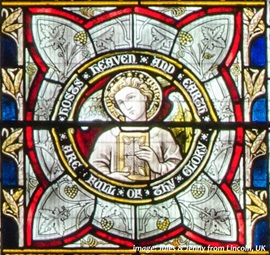
How are stained glass windows are rescued, stored and repurposed?
APPGEBE report sets high aims for quality
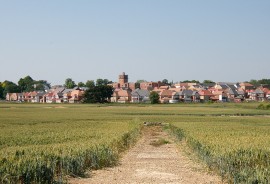
'Government must not sacrifice quality in drive to build 1.5m homes'
New measures protect Historic Shipwrecks from heritage crime

Underwater cultural heritage benefits from new HE guidance
How could the City of London skyline look in 6 years' time?

Visualisation shows approved planning applications as completed buildings
National Trust for Scotland calls for VAT cuts
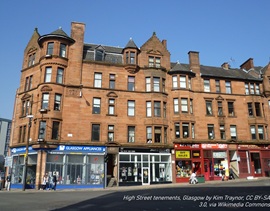
Heritage neglect is encouraged by current policies
IHBC's 'Context' Issue 186 features Industrial Heritage
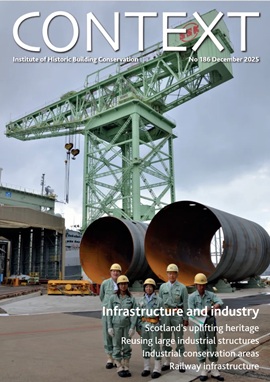
IHBC's members' journal reports on the challenges of conserving infrastructure
Book now for IHBC Annual School 2026
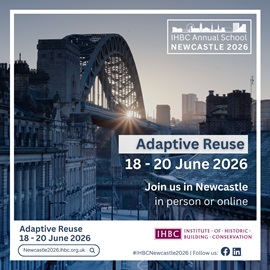
IHBC Annual School is taking place 18-20 June 2026 in Newcastle
RICHeS Research Infrastructure offers ‘Full Access Fund Call’
RICHeS offers a ‘Help’ webinar on 11 March
Latest IHBC Issue of Context features Roofing
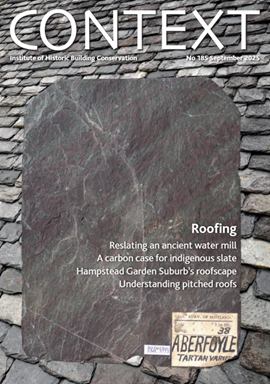
Articles range from slate to pitched roofs, and carbon impact to solar generation to roofscapes
Three reasons not to demolish Edinburgh’s Argyle House

Should 'Edinburgh's ugliest building' be saved?
IHBC’s 2025 Parliamentary Briefing...from Crafts in Crisis to Rubbish Retrofit
IHBC launches research-led ‘5 Commitments to Help Heritage Skills in Conservation’
How RDSAP 10.2 impacts EPC assessments in traditional buildings

Energy performance certificates (EPCs) tell us how energy efficient our buildings are, but the way these certificates are generated has changed.